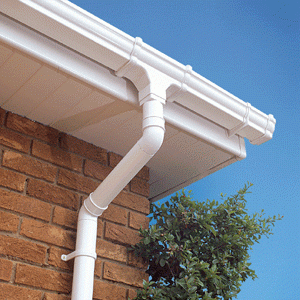
20 Myths About Local Guttering: Busted
The Importance of Local Guttering: A Comprehensive Guide
Guttering plays a crucial function in the maintenance of residential and commercial homes, protecting structures from possible water damage. Local guttering is particularly important for communities that experience heavy rainfall, snow, or extreme weather conditions. This short article dives into the significance of local guttering, its types, maintenance practices, and responses to regularly asked concerns.
Understanding Guttering
Guttering is a system created to reroute rainwater away from rooftops, decreasing the threat of leakages and water-related damage to structures. By directing the water securely to storm drains or other drainage systems, guttering safeguards foundations, walls, and landscaping.
Types of Guttering
There are several types of gutters available, each providing different advantages:
K-style Gutters:
- Popular for residences.
- Feature a flat bottom and a decorative front.
- Offered in various products, including vinyl, aluminum, and copper.
Half-round Gutters:
- Semicircular in shape, making them a visually pleasing alternative.
- Commonly seen in historic homes.
- Direct water flow efficiently but might require more maintenance.
Box Gutters:
- Rectangular and developed into the roof's structure.
- Designed to deal with heavy rainfall.
- Best for commercial buildings.
Seamless Gutters:
- Custom-made from a single piece of product.
- Lower leaks and improve toughness.
- Need professional installation but are worth the financial investment.
Significance of Local Guttering Systems
Local guttering systems are developed to accommodate the specific weather condition patterns and ecological conditions of a particular location. Here are some key advantages of having localized guttering:
Customization: Local authorities or contractors can tailor guttering systems to match the special requirements of the area, thinking about elements like typical rains and snowfall.
Effective Water Management: A properly designed local gutter system efficiently channels water away from properties, avoiding flooding and erosion in the surrounding location.
Cost-Effectiveness: Investing in localized guttering reduces the requirement for extensive repairs or replacements caused by improper drainage, saving house owners and services cash in the long run.
Key Components of Local Guttering
Understanding the components of a guttering system is essential for appropriate maintenance and performance.
Elements:
Gutter Hooks/Brackets: Hold gutters in place and need to be set up appropriately to avoid sagging.
Downspouts: Direct water from the gutters to the ground or drainage system.
End Caps: Seal completions of gutters, preventing leakages.
Gutter Guards: Prevent leaves and particles from building up, reducing the need for regular cleaning.
Elbows: Connect straight areas of downspouts for directional changes.
Maintenance of Local Guttering Systems
Routine maintenance of gutter systems is important to make sure effective water circulation. Overlooking gutter maintenance can result in blockages, overflows, and extreme damage. Here are some necessary maintenance suggestions:
Regular Cleaning: Clean gutters at least two times a year, specifically in the spring and fall. Remove leaves, twigs, and particles that can obstruct the flow of water.
Look for Leaks and Rust: Inspect for any indications of leaks or rust, especially in metal gutters. Seal any leaks without delay with appropriate sealants.
Examine Hangers and Brackets: Ensure that all brackets and hangers are safely attached. Change any damaged components to keep the stability of the gutter system.
View for Pests: Ensure that gutters are devoid of nests that could block water flow.
Evaluate the Drainage System: Make sure that downspouts direct water at least three feet far from the foundation of the building.
Frequently Asked Questions about Local Guttering
Q: How often should I clean my gutters?A: It is suggested to clean your gutters at least twice a year, preferably in the spring and fall. Additionally, if you have many trees near your home, you may need to clean them more frequently.
Q: What are the signs that my gutters need repair or replacement?A: Look for drooping or retreating from your house, rust spots, leaks or fractures, extreme water accumulation around the structure, peeling paint on the exterior of your home, or mold growth inside.
Q: Can I set up gutters myself?A: While DIY installation is possible, it is suggested to speak with a professional. Inaccurate installation can cause incorrect drainage and more problems.
Q: What products are best for gutters?A: The best material for your gutters depends upon your budget, visual preferences, and environment. Aluminum and vinyl are popular for their sturdiness and low maintenance, while copper is favored for its sophistication however comes at a higher cost.
Q: How do gutter guards work?A: Gutter guards are developed to filter out particles while allowing water to stream easily, lessening the requirement for cleaning and maintenance.
Guttering is a critical part of residential or commercial property maintenance, especially for cities dealing with specific climatic challenges. By comprehending the types of gutters, their parts, and the importance of routine maintenance, homeowner can successfully secure their investments. A well-kept guttering system not just boosts home looks but likewise contributes to sustainability by avoiding water damage and disintegration. In breaking news , the investment in quality local guttering systems will yield significant benefits in sturdiness and functionality, promoting the durability of buildings in the community.
- * *
Part
Description
Gutter Hooks
Assistance the gutters safely to avoid sagging.
Downspouts
Channel water from the gutters to the ground.
End Caps
Prevent leaks by sealing the ends of gutters.
Gutter Guards
Block particles to decrease cleaning frequency.
Elbows
Modification the direction of downspouts as needed.
By making sure that local guttering systems are well-kept and tailored to particular environmental needs, neighborhoods can accomplish higher resilience versus potential water damage difficulties.